


Is a Gate Just a Gate?
At first glance, a gate looks simple. Steel, hinges, a lock - what more could there be? But the truth is, a gate is never just a gate. And the same is true for carpentry, plumbing, electrical work, building, or any trade where skill and compliance matter.
Half the Price
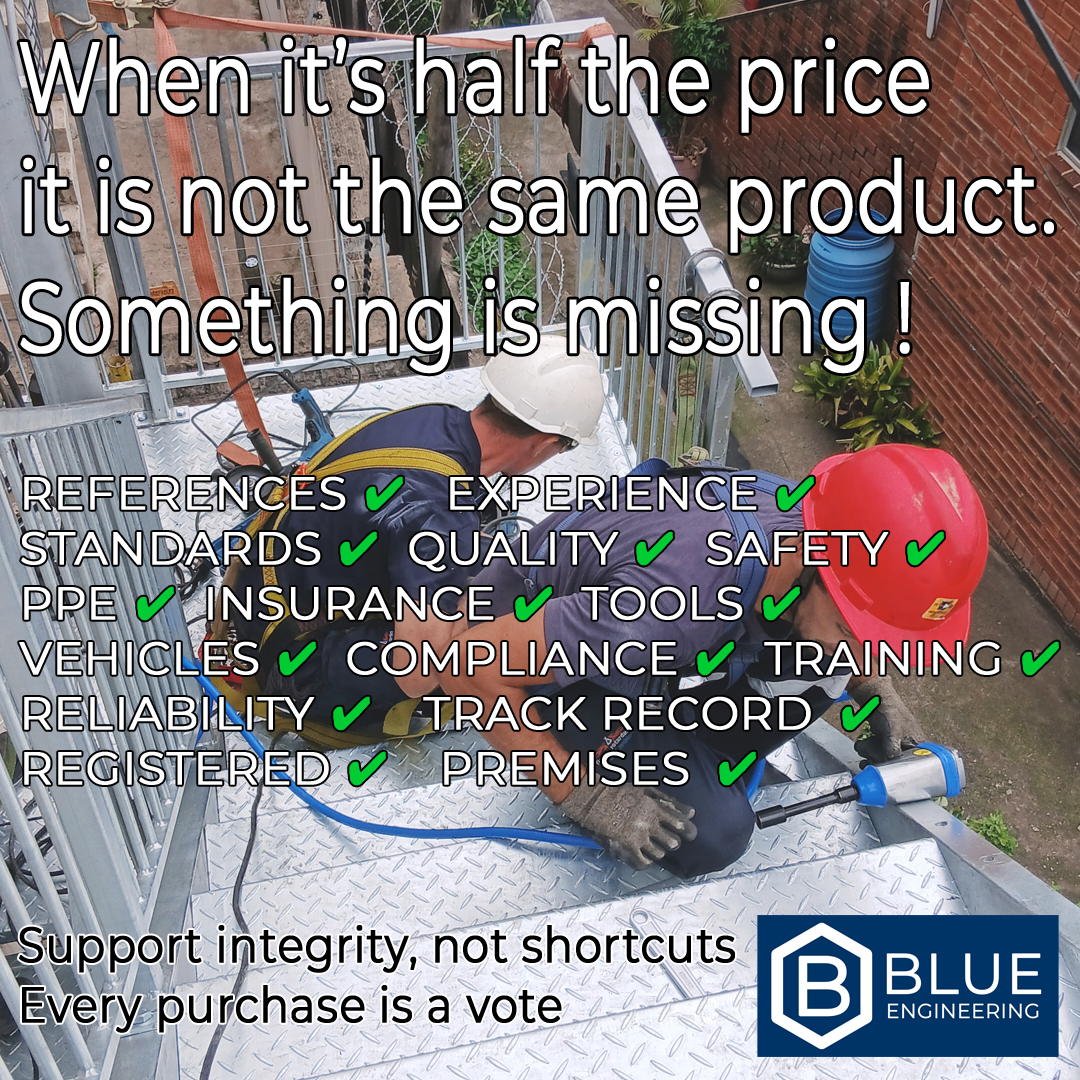
When someone says, “I found it at half the price,” they assume the product is the same. But if the materials were equal, the costs would be equal. If the operator was compliant, the operating costs would be equal. Half price only exists when something is missing - whether it’s steel thickness, hinge strength, proper equipment, or the dignity of registered labor.
Risks
And the risks are real. Sometimes the “half price” provider delivers an inferior product that fails prematurely. Other times, they run out of money mid-project and vanish, leaving the client with nothing but frustration. I’ve heard the stories: “the guy ran away with my money” That’s not savings - its loss disguised as a bargain.
Safety and PPE
Ignoring safety and PPE isn’t just a shortcut - its exploitation. I have literally seen staff working in rags, barefoot, exposed to sharp steel and heavy machinery without even the most basic protection. That isn’t just non-compliance; it’s a disregard for human dignity. When clients choose the cheapest option, they’re not only risking their own product - they’re endorsing a system that treats people as disposable.
Registered and Compliant
Registered, compliant providers invest in their crews. They provide PPE, training, and safe working conditions because they understand that staff well-being is inseparable from product quality. A reliable service provider doesn’t just deliver a finished product; they deliver it through a process that protects people, respects standards, and builds trust. That’s the difference between a shortcut and a system.
Overheads
Running a registered, compliant business is not cheap. Rent, electricity, PPE, staff well-being, tax, insurance, and all the costs related to compliance add up to significant overheads. On top of that, there are the costs of proper equipment and tools - machines that must be maintained, calibrated, and replaced when worn. Vehicles add another layer: fuel, maintenance, licensing, and insurance all contribute to operating costs. Many people have no idea what it actually costs to run a business and assume that because it’s a business, the owner must be rich or ripping them off. In reality, those overheads are the price of doing things properly - and they are what make the difference between a shortcut and a sustainable, trustworthy service.
Undermining the system designed to protect
Running a compliant business also means meeting rigorous government requirements. Licenses, inspections, audits, and reporting obligations all add to the overhead. These aren’t optional - they’re the framework that ensures safety, accountability, and fairness. Unregistered operators skip all of this, which is why they can undercut. But when clients reward shortcuts, they undermine the very system designed to protect them.
The moral side
There’s also the moral side. Choosing the cheapest shortcut often means supporting businesses that don’t pay tax, don’t provide PPE, don’t pay fair wages, and don’t carry proper overheads. Every purchase is a vote. When we reward shortcuts, we reinforce a system that erodes standards, safety, and dignity.
Ghosting, shortcuts and broken promises
And in the process, we chase away the real service providers - the ones who do things right. Registered, compliant businesses cannot compete against operators who cut every corner in the book. Eventually, those providers step back, and the market is left with ghosting, shortcuts, and broken promises.
References and proven track record
Reliable, registered service providers will always have something the shortcut operators don’t: references and a proven track record. They can point to completed projects, satisfied clients, and years of consistent delivery. That history is the best guarantee of future reliability - and it’s what separates professionals from opportunists.
Aftersales service and support
True craftsmanship isn’t measured at the point of delivery, but in the years that follow. Lasting value comes from structured aftersales service and dependable product support - the assurance that performance, safety, and reliability are sustained over time. Quality is not just what is built, but the commitment to stand behind it long after the work is done.
Checklist
But references alone aren’t enough. Clients should also do their own due diligence:
• Check references and track records.
• Verify what materials are actually being used and whether they meet specification.
• Confirm the provider has a proper workplace facility.
• Ensure they adhere to occupational health and safety standards.
• Ask if they carry insurance.
• Assess whether they use proper equipment, tools, and vehicles.
• Use a checklist to compare providers before committing.
Conclusion
So is a gate just a gate? No. It’s a reflection of choices - materials, compliance, equipment, wages, responsibility, and reputation - that set providers miles apart. The same applies to carpenters, plumbers, electricians, builders, and contractors and anyone who manufactures or offers services. Every product tells a story, and the story we choose to support shapes our standards, our markets, and our legacy.